charles@cmmstudio.com

Home/charles@cmmstudio.com

About charles@cmmstudio.com

This author has not yet filled in any details.
So far charles@cmmstudio.com has created 129 blog entries.

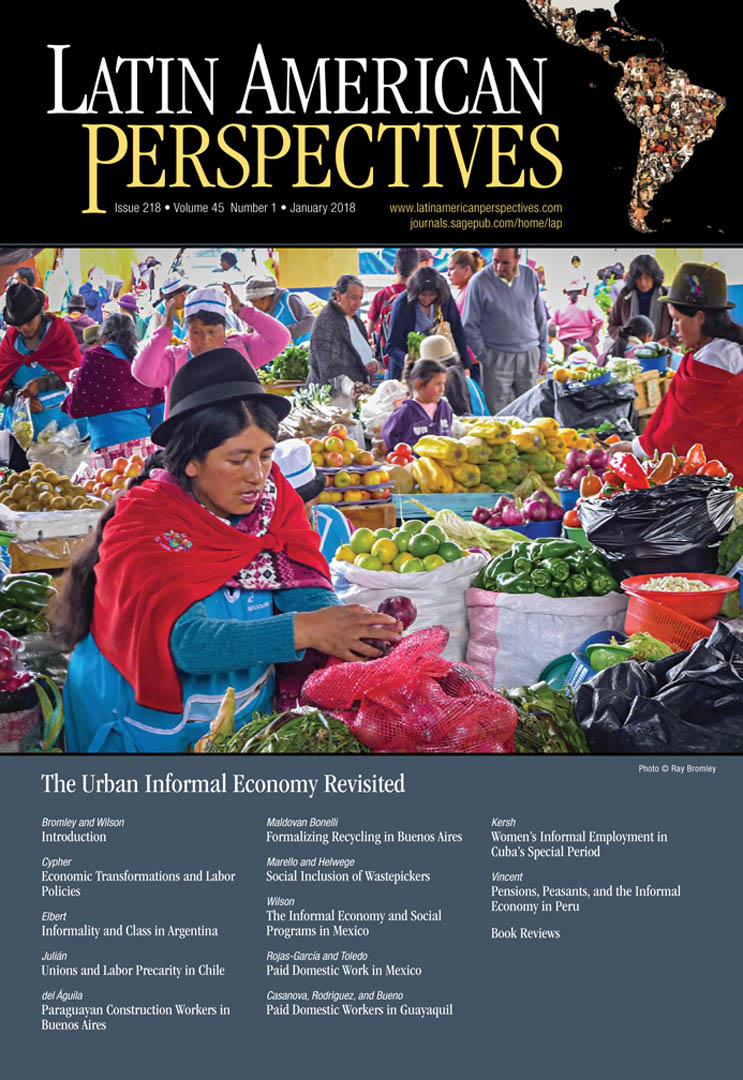
The Urban Informal Economy Revisited

The Urban Informal Economy Revisited Issue #: 218  | Volume #: 45  | Number #: 1 Date: January 2018 Interviewer: Alexander Scott Interviewees: Ray Bromley and Tamara Diana Wilson Short Description: The distinction between “formal” and “informal” jobs and enterprises was first introduced in the 1970s and has been very widely used ever since. The underlying assumption was that the formal economy would gradually expand and dominate, and the informal economy would gradually disappear. The reality, however, associated with neoliberal economic development and growing socio-economic inequality, is that the informal economy has persisted and sometimes grown, and that job security and benefits in the formal economy have often diminished. This theme issue focuses on the informal economy under neoliberalism, with case studies of some of the most significant and persistent occupations. Several of the articles focus on the process of the “formalization” of informal workers, a goal expressed by the International Labour Organization, but often fraught with difficulties. LATIN AMERICAN PERSPECTIVES is a theoretical and scholarly journal for discussion and debate on the political economy of capitalism, imperialism, and socialism in the Americas. For more than forty years, it has published timely, progressive analyses of the social forces shaping contemporary Latin [...]
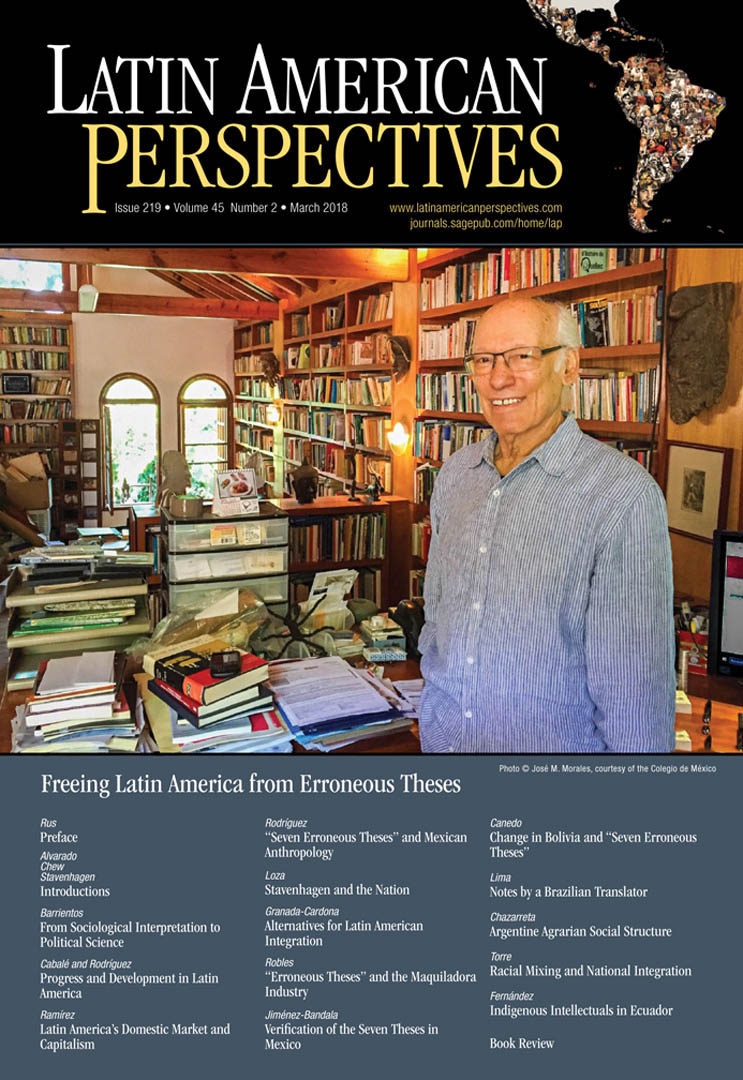
Freeing Latin America from Erroneous Theses

Freeing Latin America from Erroneous Theses Issue #: 219  | Volume #: 45  | Number #: 2 Date: March 2018 Interviewer: Alexander Scott Interviewees: Jan Rus, Arturo Alvarado, and Serena Chew Plascencia Short Description: More than a half century after the publication of Rodolfo Stavenhagen’s landmark essay “7 Erroneous Thesis about Latin America”, its critique of dominant development thinking remains sharp, as was shown at a colloquium hosted by El Colegio de México 50 years to the day after the publication of the original text. The debate at the colloquium opened a new opportunity to rethink and place Stavenhagen’s theories in today’s context. In this latest issue of LAP, we are glad to bring together some of the essays written by participants in this vibrant debate. The essays analyze the relevance of Stavenhagen’s critique as well as the changes the continent has gone through and the new challenges it faces in today’s rapidly changing global order. In this manner, we hope to honor and celebrate Stavenhagen’s legacy as one of the great Latin American scholars of the long twentieth century, and to provoke further debate that shines light on the continent of the open veins.

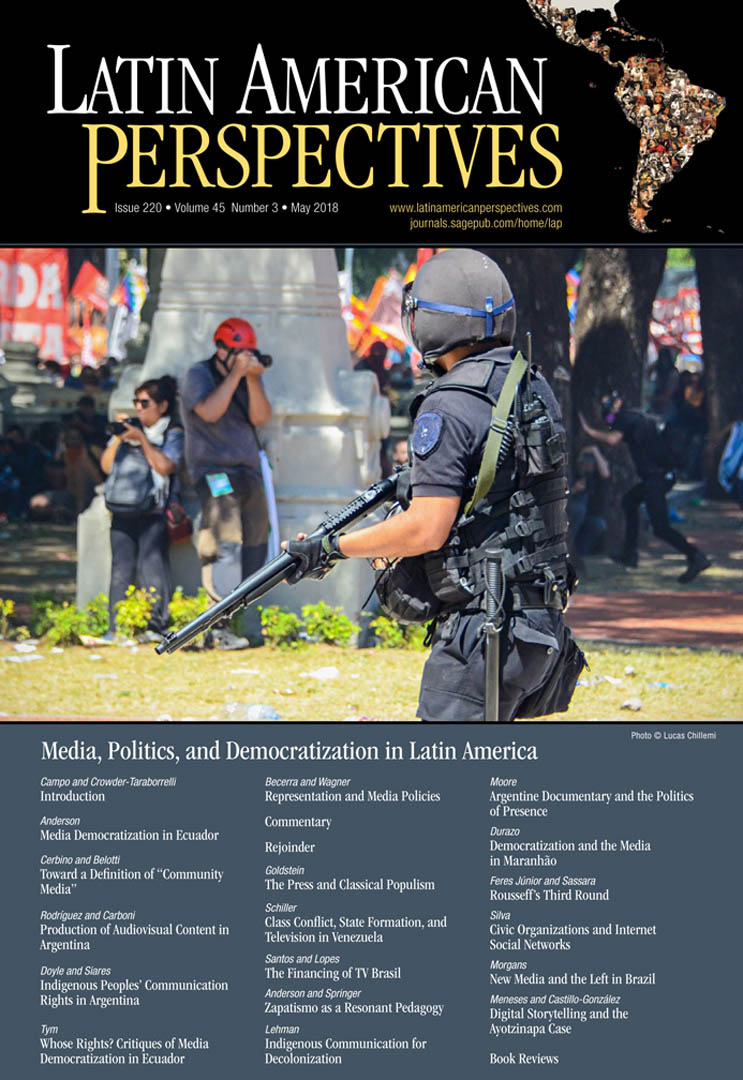
Media, Politics, and Democratization in Latin America

Issue #: 220  | Volume #: 45  | Number #: 3 Date: May 2018 Interviewer: Alexander Scott Interviewees: Javier Campo and Tomás Crowder-Taraborrelli Short Description: This special issue of Latin American Perspectives investigates a matter that has undergone critical transformations in recent years. From the period of progressive governments to the current neoliberal restoration, the media went from being thought of as a public service to a private business. This issue features articles on Ecuador, Brazil, Bolivia, Chile, Mexico and Argentina and covers a broad disciplinary spectrum of studies: from the laws of communication put into practice or projected, to the deregulation of the most advanced legislations of Latin America, to communication rights, audiovisual analysis, memory studies and historiographies of the Latin American left. The editors were committed to organizing a special issue about the favorable democratization of the media, but in the process, the media landscape was transformed into a reactionary onslaught of the monopolies of information and communication; a process that ended in the electoral victories of right-wing corporatists.

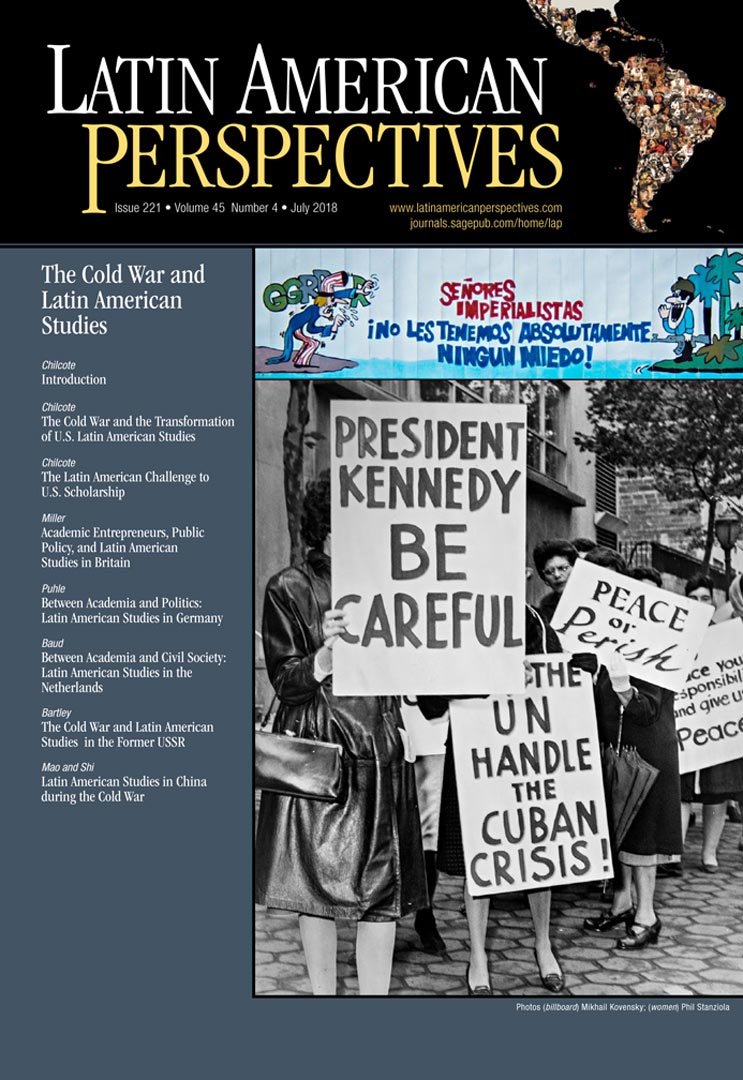
The Cold War and Latin American Studies

Title: The Cold War and Latin American Studies Issue #: 221  | Volume #: 45  | Number #: 4 Date: July 2018 Interviewer: Alexander Scott Interviewees: Ronald Chilcote Short Description: The Cold War shaped and deeply impacted Latin American Studies after World War II. This special issue includes incisive essays on the United States, United Kingdom, Germany, Netherlands, Soviet Union, and China. Initially LAS evolved alongside U.S. foreign policy and a series of coups to contain progressive movements and support conservative authoritarianism, beginning in Guatemala (1954), but progressive movements emerged after the Cuban Revolution (1959).

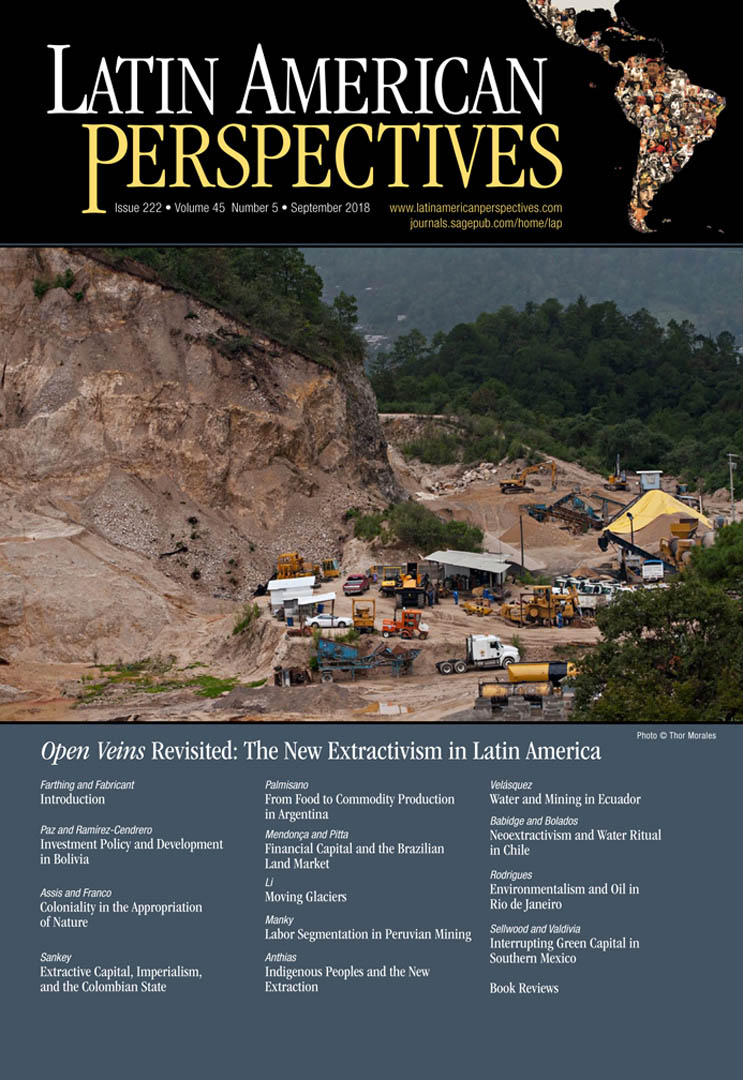
Open Veins Revisited: The New Extractivism in Latin America

Title: Open Veins Revisited: The New Extractivism in Latin America Issue #: 222 | Volume #: 45  | Number #: 5 Date: September 2018 Interviewer: Alexander Scott Interviewees: Linda Farthing and Nicole Fabricant Short Description: Ever since the elusive search for El Dorado began in the 16th century, the history of Latin America has been a tale of resource extraction. This issue focuses on the interconnections and impacts of global resource-based economies on topics as wide-ranging as local people and their environments, national policies and international financial capital. Rather than finding neat and tidy conclusions, it suggests that nuanced social, political economic analyses better enable us to understand and analyze how contemporary extractivism is reshaping Latin America.  

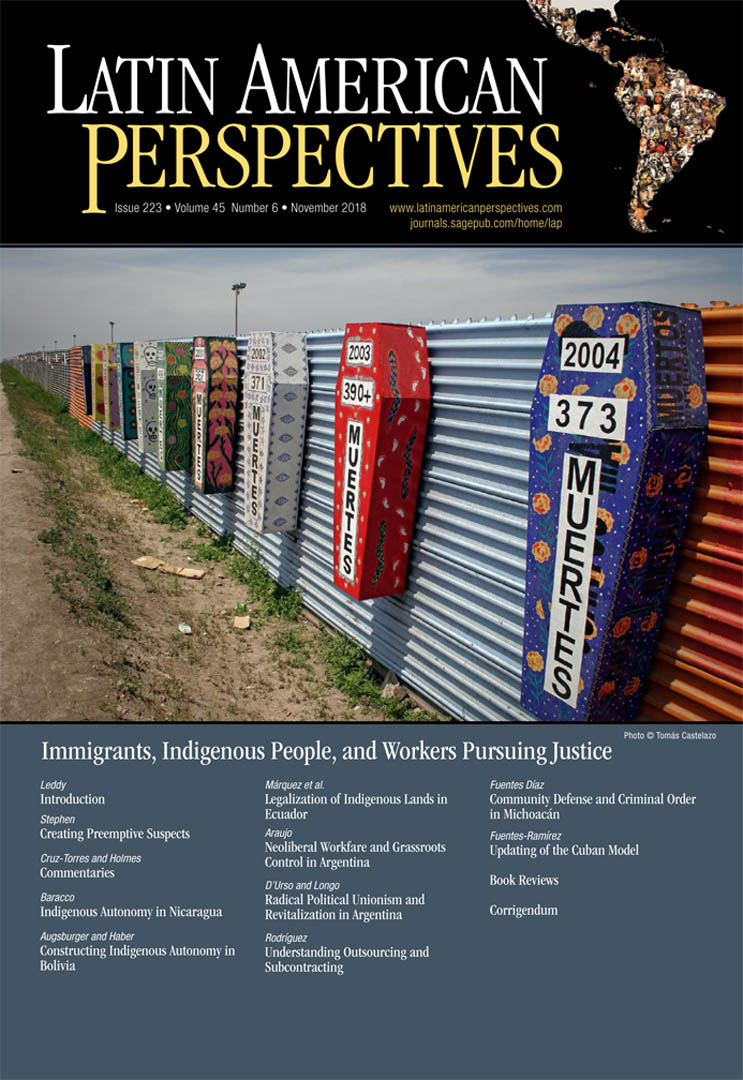
Immigrants, Indigenous People, and Workers Pursuing Justice

Title: Immigrants, Indigenous People, and Workers Pursuing Justice Issue #: 223  | Volume #: 45  | Number #: 6 Date: November 2018 Interviewer: Alex Scott Interviewees: Lynn Stephen, María L. Cruz-Torres and Seth M. Holmes Short Description: This issue covers a number of topics that are very much in the forefront of political discussion, among them immigration, indigenous rights, workers’ struggles, and governance.

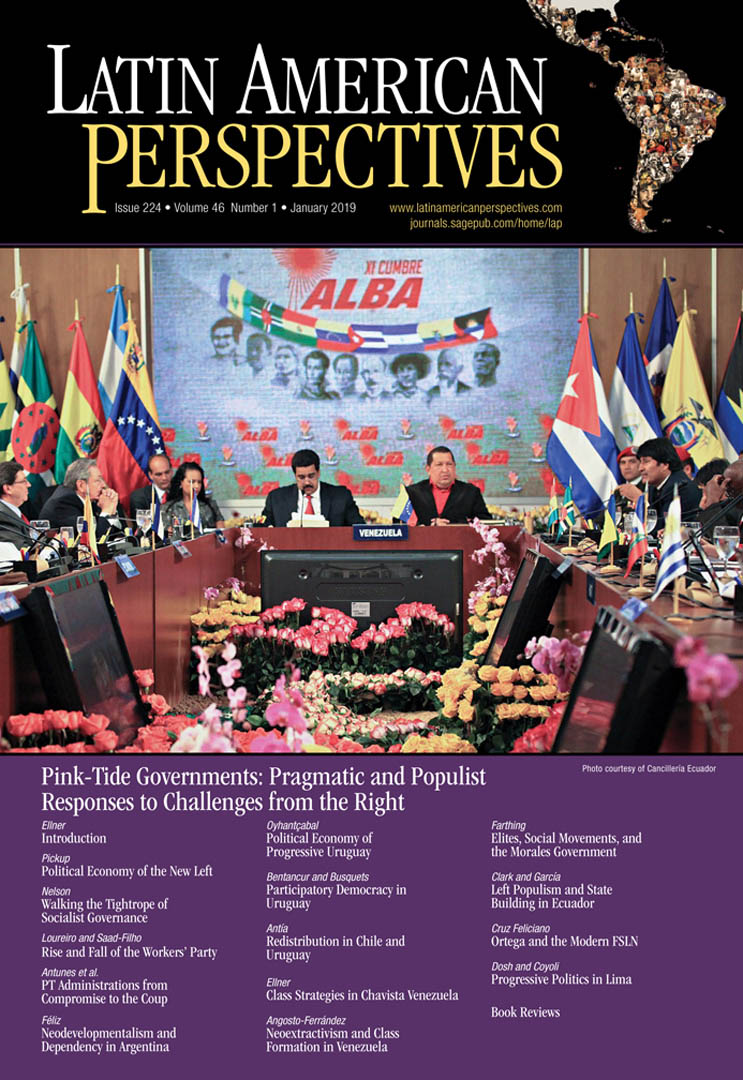
Pink-Tide Governments: Pragmatic and Populist Responses to Challenges from the Right

Title: Pink-Tide Governments: Pragmatic and Populist Responses to Challenges from the Right Issue #: 224 | Volume #: 46 | Number #: 1 Date: January 2019 Interviewer: Alexander Scott Interviewees: Steve Ellner Short Description: This issue sheds light on positive and negatives sides of progressive or “Pink Tide” governments which it places in political and economic contexts, specifically destabilizing efforts by a “disloyal opposition” and disinvestment by the private sector. The issue looks at the ways the government reacted to these challenges by making concessions and carrying out policies that in the long run undermined economic and political stability and the achievement of stated goals. Along these lines, Pink Tide governments implemented pragmatic strategies to win over or neutralize the business class and populist initiatives to meet the short-term needs of the popular sectors.

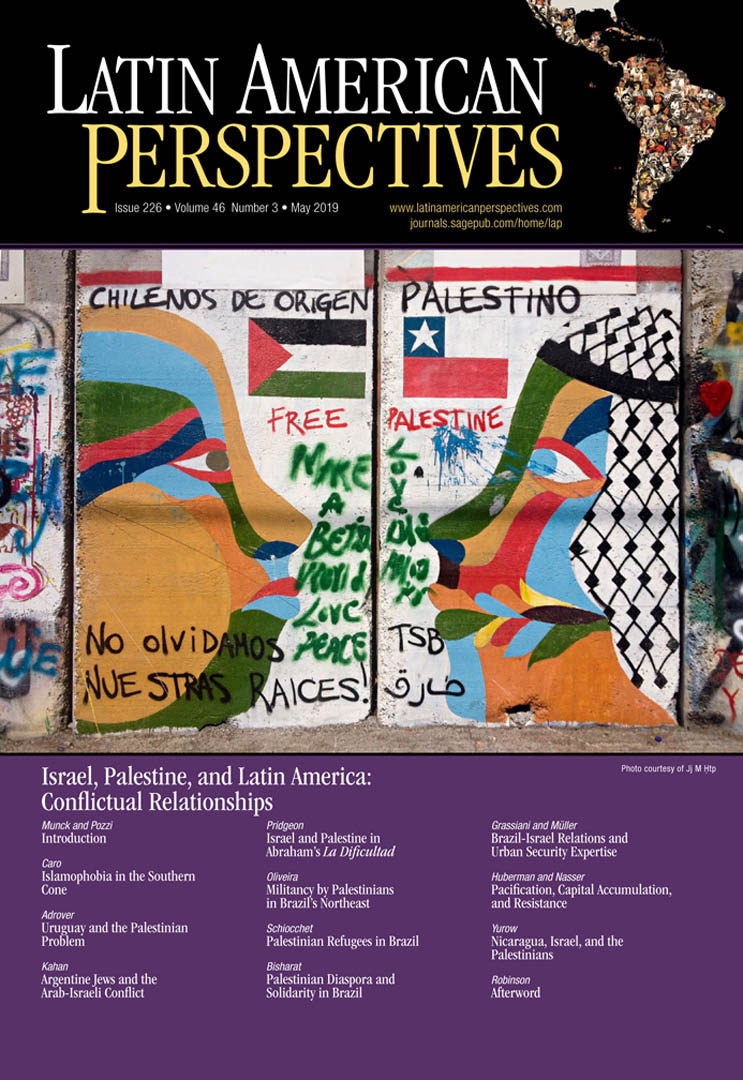
Israel, Palestine, and Latin America: Conflictual Relationships 226/46/3 May 2019

Issue #: 226  | Volume #: 46  | Number #: 3 Date: May 2019 Interviewer: Alexander Scott Interviewees: Pablo Pozzi Short Description: This issue of LAP represents a step toward a better understanding of the Israeli-Palestinian conflict in a Latin American context. The articles cover a range of historical and current topics and show that Arab and Jewish histories are an integral part of Latin American history, that Latin America has been an important actor in the conflict over Palestine, and that the issue is being played out today in ever-changing circumstances. Historical topics address how specific Latin American countries dealt with the creation of Israel and the Six-Day War while other articles consider more recent topics including the role and treatment of the Palestinian diaspora and Israeli marketing of urban security expertise.

Brazil’s Crisis Of Memory: Embracing Myths And Forgetting History

Title: Brazil’s Crisis Of Memory: Embracing Myths And Forgetting History Issue #: 227  | Volume #: 46 | Number #: 4 Date: July 2019 Interviewer: Alexander Scott Interviewees: Paulo Simões Short Description: This issue is devoted to Brazil and examines how the last few years have brought significant transformations to the government and society, which defy earlier expectations, both positive and negative. Articles focus on political and economic subjects ranging from public demonstrations and labor unionization, the results of the PT administrations’ policies of land reform and healthcare management, to the difficulties brought on by the international recession, as well as questions of historical formation, cultural construction, self-identity, self-definition and criticism, and the conservative backlashes which have led to the rise of the rightist regime now in power. LATIN AMERICAN PERSPECTIVES is a theoretical and scholarly journal for discussion and debate on the political economy of capitalism, imperialism, and socialism in the Americas. For more than forty years, it has published timely, progressive analyses of the social forces shaping contemporary Latin America. http://latinamericanperspectives.com

Issue #227 July 1 2019 Volume 46-4

  This issue is devoted to Brazil and examines how the last few years have brought significant transformations to the government and society, which defy earlier expectations, both positive and negative.  Articles focus on political and economic subjects ranging from public demonstrations and labor unionization, the results of the PT administrations’ policies of land reform and healthcare management, to the difficulties brought on by the international recession, as well as questions of historical formation, cultural construction, self-identity, self-definition and criticism, and the conservative backlashes which have led to the rise of the rightist regime now in power.   TABLE OF CONTENTS | PURCHASE THIS ISSUE